Is Air Duct Cleaning Worth It? What Michigan Homeowners Should Know
Is Air Duct Cleaning Worth It? What Michigan Homeowners Should Know Air duct cleaning can be worth it when ducts have substantial visible mold…
Read More
If you keep cleaning only to find dust back on your furniture a day or two later, you may be asking:
Why is my house so dusty?
Dust can come from many places, including outdoor air, pets, clothing and fabrics, cooking, everyday activity, HVAC filters, dryer vents that have not been cleaned and your heating and cooling system.
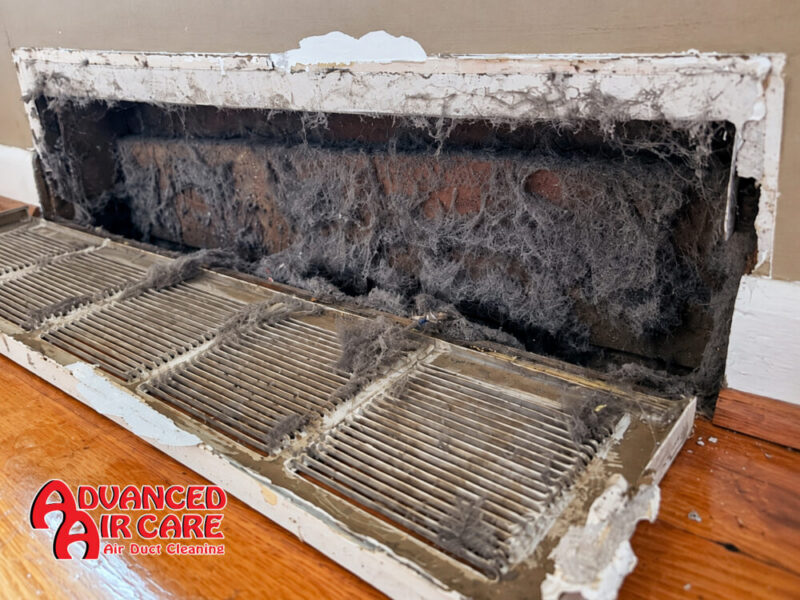
Your air ducts can sometimes be part of the problem—especially if there is significant dust in air ducts, debris is coming from the vents, or leaks in the ductwork are allowing dust from attics, basements, or other unconditioned spaces into the system.
At Advanced Air Care, we help Metro Detroit homeowners determine what is happening inside their ductwork before recommending the right next step.
If you’re wondering why it is so dusty in my house, start by remembering that dust is constantly being created and brought indoors.
Common sources include:
So if you’re asking why my home is so dusty, the answer may involve more than one source.
The EPA notes that particles entering from outdoors and everyday indoor activities can sometimes contribute more household dust than the material sitting inside ductwork. (US EPA)
They can contribute under certain conditions.
If ducts contain excessive dust or debris—or particles are actually being released from supply registers—professional air duct cleaning may be worth considering. EPA guidance specifically identifies excessive buildup and particles being released into the home as situations where duct cleaning may be appropriate. (US EPA)
Possible signs include:
If you’re constantly thinking about why our house is so dusty,the dust aggravating allergies, and the health of my family , an inspection can help determine whether the HVAC system is contributing.
If you’re asking why my house gets so dusty shortly after cleaning, check your HVAC filter first.
A dirty, damaged, incorrectly sized, or poorly seated filter may allow more particles to circulate through the system.
Check that:
EPA guidance also recommends regular filter replacement and making sure air cannot bypass the filter through gaps around the filter holder. (US EPA)
If the filter looks fine but you’re still asking why my house has so much dust, it may be worth having the duct system inspected.
Yes, duct leakage can be another factor.
Leaks on the return side of an HVAC system can allow air from areas such as an attic, crawlspace, basement, or wall cavity to enter the duct system.
Advanced Air Care’s Aeroseal guidance specifically discusses how unsealed ductwork can draw particles from unconditioned areas into the HVAC system. (Advanced Air Care)
So if you’re asking why do I have so much dust in my house even after cleaning the home and changing the filter, the issue may involve both:
contamination already inside the ducts + air entering through duct leaks.
In that situation, cleaning the system removes existing debris, while duct sealing addresses the pathway that may allow additional particles to enter.
A small amount of dust around air vents does not automatically mean the entire duct system is dirty.
Return registers in particular can collect dust because household air is constantly being pulled through them.
However, investigate further if you notice:
If you see dust coming from air vents or dust coming from vents while the HVAC system is running, the ductwork should be inspected.
Possible causes include:
Homeowners may also notice dust coming from AC vents during the cooling season because the same central duct system commonly serves both heating and cooling.
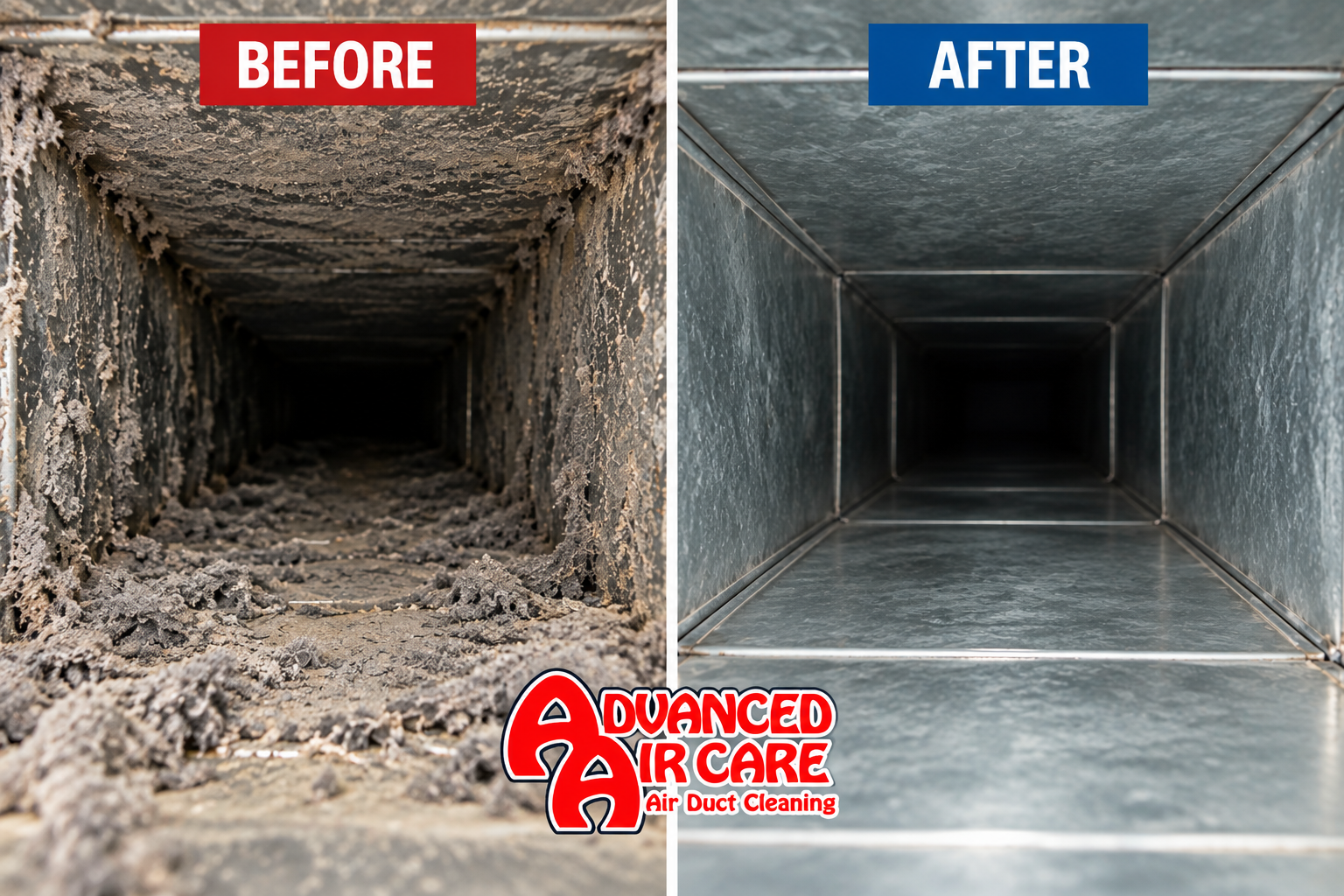
Professional duct cleaning can remove accumulated material when the system is genuinely contaminated.
Black dust coming from air vents deserves closer attention, but don’t immediately assume it is mold.
Homeowners may describe the problem as:
Dark material could have several possible sources, so it should be inspected before conclusions are made.
EPA specifically recommends that if something appears to be mold, homeowners should not rely only on appearance; positive identification may require expert evaluation or testing. (US EPA)
If you see persistent black material or unusual buildup around multiple vents, have the system inspected rather than simply wiping the vents and ignoring it.
Yes.
Homes with pets may develop pet hair in air ducts, especially near return-air openings and registers.
Routine cleaning around registers, regular vacuuming, and proper filter maintenance can help reduce what enters the HVAC system.
If large amounts of pet hair and debris have accumulated deeper inside the ductwork, a professional inspection can determine whether cleaning is appropriate.
You can safely clean dust from air vents and registers as part of normal household cleaning.
You can:
However, cleaning the visible grille is not the same as cleaning the complete duct system.
Professional air vent cleaning and whole-system duct cleaning use specialized equipment to remove buildup farther inside the HVAC system.
Advanced Air Care uses a truck-mounted 16,000 CFM PowerVac system as part of its duct-cleaning process. (Advanced Air Care)
.
1- Why is my house so dusty all the time?
If you’re wondering why my house is so dusty all the time, possible sources include outdoor particles, pets, fabrics, carpets, household activity, filters, duct leakage, and debris inside the HVAC system.
2- Why is there so much dust in my house?
If you’re asking why there is so much dust in my house, check your filter, vents, cleaning routine, outdoor-air entry points, and HVAC system. More than one source may be contributing.
3- Why do I have so much dust in my house after cleaning?
Dust can return quickly because it continues to enter and circulate through the home. If excessive dust keeps returning, check the HVAC filter and look for visible buildup or particles coming from vents.
4- Why does my house get so much dust?
If you’re wondering why my house gets so much dust, consider pets, carpeting, open windows, filter problems, renovation debris, and the condition of your ducts.
5- Can dust in air ducts come back into the house?
Some material can be distributed through the HVAC system, particularly when there is excessive buildup or particles are visibly being released. However, not all dust sitting inside ducts enters the living space. (US EPA)
6- Does a dusty house automatically mean I need duct cleaning?
No.
A dusty home does not automatically mean you need professional duct cleaning. The better approach is to identify the source first.
If your ducts contain significant buildup, debris is visibly coming through the registers, or the system has another contamination issue, professional cleaning may make sense.
If you’ve been asking why my house is so dusty and basic cleaning and filter changes aren’t solving the problem, the next step may be to look inside the HVAC system.
At Advanced Air Care, we provide professional air duct cleaning, duct cleaning, and air vent cleaning throughout Metro Detroit.
Our team can inspect your system, explain what we find, and help determine whether duct cleaning—or another solution such as addressing duct leakage—is appropriate for your home.
Call Advanced Air Care at 586-416-1900 or request a free quote online.
Written by the Advanced Air Care team
A family-run air duct cleaning and Aeroseal company in Macomb, Michigan, serving Metro Detroit homes and businesses since 2004.
Straight answers about ducts, dust and Aeroseal from our Macomb team.
Is Air Duct Cleaning Worth It? What Michigan Homeowners Should Know Air duct cleaning can be worth it when ducts have substantial visible mold…
Read More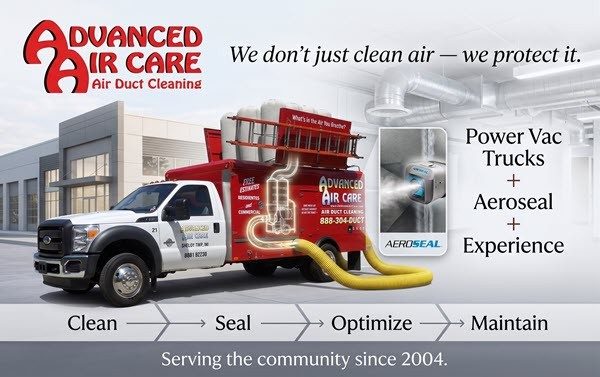
Is Aeroseal Worth It? Pros, Limits and When It Makes Sense Aeroseal can be worth it when a home has measurable duct leakage—especially when…
Read More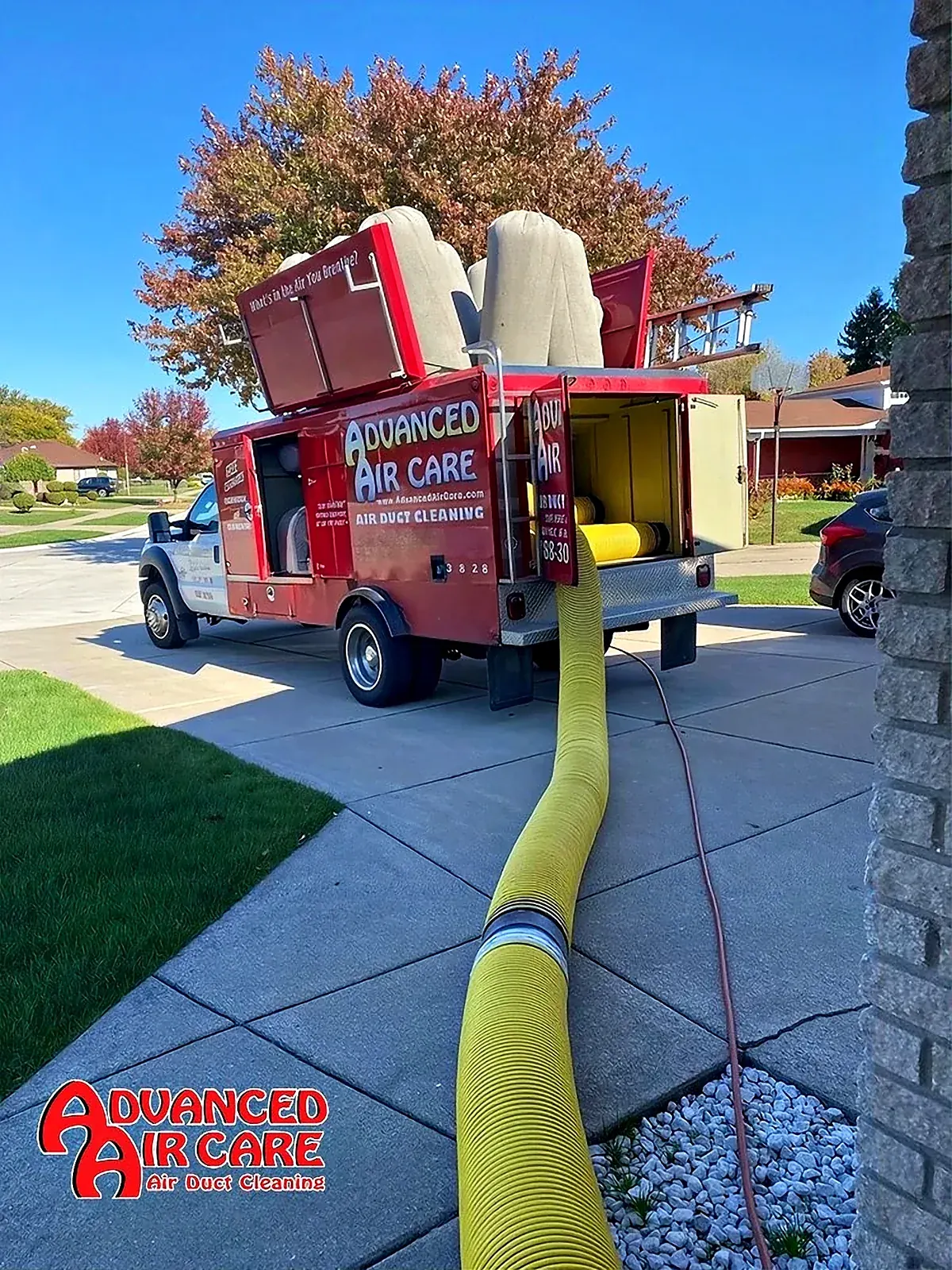
How Often Should You Have Your Air Ducts Cleaned? There is no single air duct cleaning schedule that applies to every home. The EPA…
Read MoreFree in-home quotes across Macomb, Oakland and Wayne counties. Tell us about your home and we’ll recommend only what your ducts actually need.