Air duct cleaning and air duct sanitizing are not the same service.
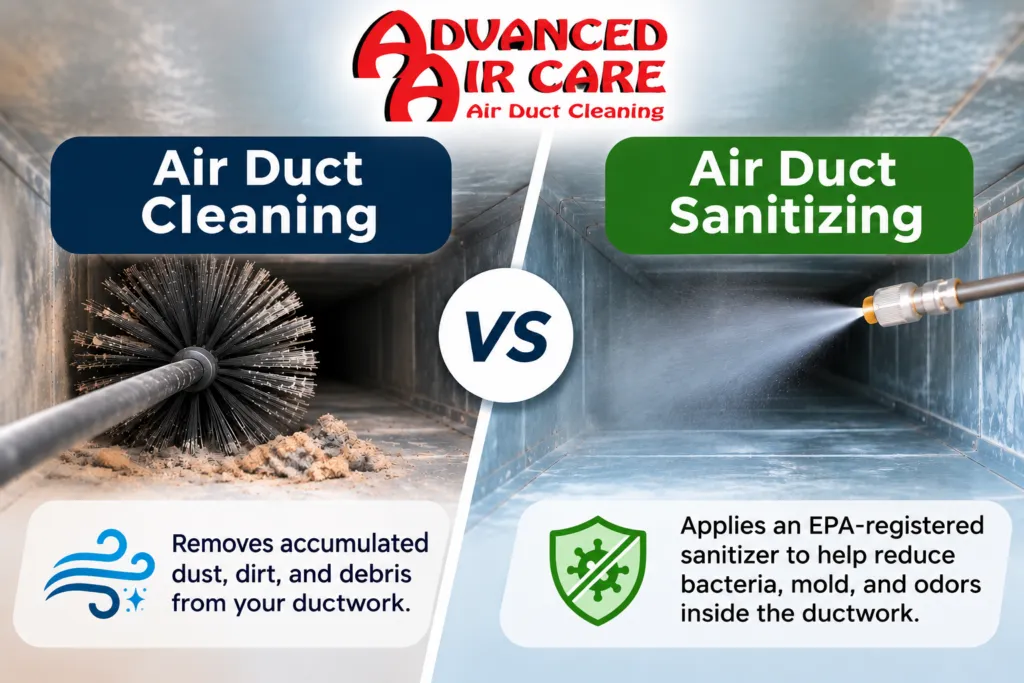
Cleaning physically removes dust, lint, debris, and other material from the HVAC system. Sanitizing involves applying an appropriate antimicrobial product to eligible surfaces after cleaning when there is a valid reason for that additional treatment.
The order matters: clean first, sanitize when appropriate—not the other way around.
NADCA recommends source removal as the foundation of HVAC cleaning and says antimicrobial products should only be considered after mechanical cleaning has been completed and when the treatment is actually needed. (NADCA)
For Michigan homeowners, understanding this difference can help you know what you are paying for and avoid confusing a quick chemical application with complete professional duct cleaning.
What Is Air Duct Cleaning?
Professional air duct cleaning is primarily a physical cleaning process.
The goal is to loosen and remove accumulated material from the HVAC system, including things such as:
1- Dust
2- Dirt
3- Construction debris
4- Pet hair
5- Other accumulated particulate matter
NADCA describes proper HVAC cleaning as source removal: contaminants are loosened from system surfaces and collected using vacuum equipment. It also recommends considering the HVAC system as a whole rather than cleaning only the visible register covers. (NADCA)
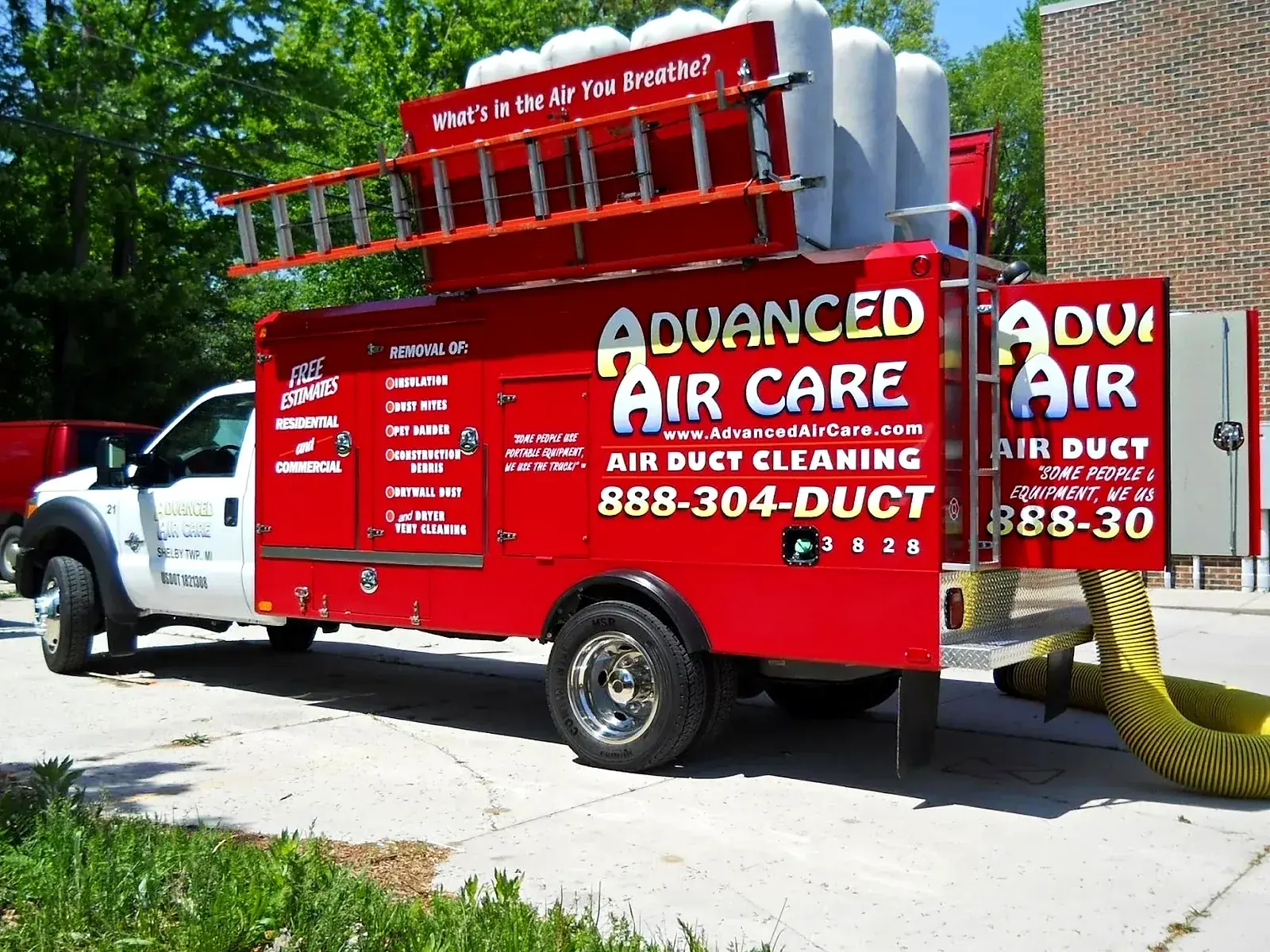
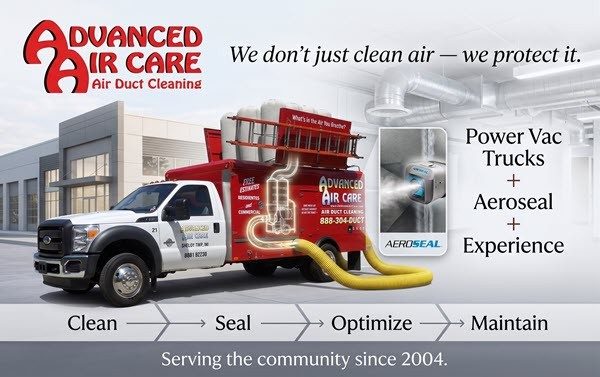
At Advanced Air Care, our documented 9-step process uses a truck-mounted 16,000 CFM PowerVac system to create negative pressure while branch lines, trunk lines, vent covers, and applicable HVAC components are cleaned. (Advanced Air Care)
What Is Air Duct Sanitizing?
Air duct sanitizing is different because it involves an antimicrobial product rather than simply removing physical debris.
EPA defines sanitizing on surfaces as using a chemical product to reduce or kill bacteria. Sanitizers and disinfectants are regulated antimicrobial pesticides, and products must be used according to their registered label directions. (US EPA)
For HVAC systems, that distinction is especially important.
Not every antimicrobial product is appropriate for every duct material or every HVAC application. EPA says products used in HVAC systems must be specifically labeled for the intended use, and no biocides are currently registered for use on internally insulated fiberglass duct systems. (US EPA)
So sanitizing air ducts should never simply mean spraying an unspecified chemical into the system.
Air Duct Cleaning vs. Sanitizing at a Glance
Air Duct Cleaning | Air Duct Sanitizing |
Physically removes accumulated debris | Uses an antimicrobial treatment on eligible surfaces |
Relies on agitation and vacuum collection | Requires an appropriate, registered product |
Usually comes first | Should only be considered after cleaning |
Addresses physical contamination | May address specific microbial concerns when appropriate |
Does not require every home to receive chemical treatment | Should be based on the condition and materials of the HVAC system |
The most important takeaway is:
Sanitizing does not replace cleaning.
Applying a sanitizer to a dirty HVAC surface does not remove the dust and debris that should first be physically cleaned away.
Does Every Home Need Air Duct Sanitizing?
No.
Homeowners should be cautious of companies that automatically recommend chemical treatment with every duct cleaning regardless of system condition.
EPA says the use of chemical biocides inside ducts remains an area where the benefits and potential effects have not been fully established. It recommends understanding the advantages and disadvantages before allowing a chemical treatment inside the duct system. (US EPA)
NADCA likewise says antimicrobial chemicals should only be considered after mechanical cleaning and when the need has been determined. (NADCA)
That means the recommendation should depend on:
1- What is actually found in the system
2- The type of duct material
3- The reason treatment is being considered
4- Whether the product is registered for that application
5- Whether the label directions can be followed correctly
What About Mold in Air Ducts?
Suspected mold requires additional care.
If substantial visible mold is present on bare sheet-metal ductwork, cleaning may be appropriate. However, the underlying moisture source must also be corrected or the problem can return.
EPA also advises that wet or mold-contaminated fiberglass duct material generally needs to be removed and replaced rather than simply cleaned or treated with chemicals. (US EPA)
And something that looks like mold cannot always be confirmed based on appearance alone.
So homeowners should be wary of statements such as:
“Your ducts have mold, so we need to sanitize everything.”
The better approach is to determine:
1- What the substance actually is
2- Why moisture is present
3- Which surfaces can be cleaned
4- Whether any additional treatment is appropriate
How Does Advanced Air Care Approach Cleaning and Sanitizing?
At Advanced Air Care, physical cleaning is a major part of the process—not an afterthought.
Our current documented duct-cleaning process includes:
1- System preparation
2- 16,000 CFM PowerVac negative pressure
3- Branch-line cleaning
4- Main trunk-line cleaning
5- Vent-cover cleaning
6- Applicable HVAC component cleaning
7- Sanitization steps
8- System reassembly and final testing
AAC’s process currently includes sanitization of vent covers and a sanitizing step following the physical cleaning process. (Advanced Air Care)
Any antimicrobial product used in an HVAC system should be appropriate for the specific application and used according to its EPA registration and label directions. (US EPA)
Is Sanitizing the Same as Disinfecting?
No.
These words are sometimes used interchangeably in advertising, but EPA distinguishes between them.
Cleaning removes dirt and organic material.
Sanitizing uses chemicals to reduce or kill bacteria on surfaces.
Disinfecting uses products intended to kill viruses and bacteria on surfaces. (US EPA)
More importantly, a product’s claims depend on its EPA registration and label. A company should not describe a product as a sanitizer, disinfectant, or other antimicrobial treatment beyond what its approved labeling actually supports.
What Should You Ask Before Agreeing to Duct Sanitizing?
Before allowing a chemical treatment in your HVAC system, ask:
1- What product will be used?
2- Why is sanitizing being recommended?
3- Is the product registered for this specific HVAC application?
4- What surfaces can it legally be used on?
5- Will the ducts be physically cleaned first?
6- Are any parts of my system internally insulated?
7- Are there occupancy or ventilation instructions?
8- What problem is the treatment intended to address?
EPA specifically recommends asking to see the product label and making sure the treatment is used only according to its directions. (US EPA)
A professional company should be able to answer those questions clearly.
Air Duct Cleaning and Sanitizing FAQs
1- Is air duct sanitizing necessary after every cleaning?
No. Sanitizing should be based on the condition of the HVAC system and whether an appropriate treatment is actually warranted.
Does sanitizing clean dirty air ducts?
No. Sanitizing does not physically remove accumulated dust and debris. Proper cleaning should come first.
Can I sanitize air ducts without cleaning them first?
NADCA recommends mechanical surface cleaning before antimicrobial treatment is considered. (NADCA)
Can sanitizing remove mold?
Chemical treatment should not be presented as a universal solution for mold. The contamination, duct material, and underlying moisture source must first be evaluated. Wet or moldy fiberglass duct material may require replacement. (US EPA)
Is air duct sanitizing safe?
It depends on the product, the surface, and how it is applied. EPA requires antimicrobial products to be used according to their registered labels and intended applications. (US EPA)
Not Sure Whether Your Ducts Need Cleaning or Sanitizing?
You should not have to guess whether your home needs air duct cleaning, sanitizing, or both.
At Advanced Air Care, we provide professional air duct cleaning throughout Metro Detroit using our PowerVac equipment and detailed cleaning process.
We can help you understand the condition of your HVAC system and the appropriate scope of service before the work begins.
Call Advanced Air Care at (586) 416-1900 or request your free quote online.

I appreciate the care you took to keep your explanations clear. It made the article welcoming and interesting to read.
Thank you for your feedback. We’re glad you found the article clear and enjoyable to read.
Your article was a welcome read today. Thanks for presenting your thoughts in a way that felt clear and considered.
Thank you for reading! We are really glad you found it clear and enjoyable.