Signs of Leaky Ductwork: Dust, Comfort and Energy-Loss Clues
Leaky ductwork can show up as uneven room temperatures, weak airflow, higher heating and cooling costs, or unusual dust—but no single symptom proves that your ducts are leaking.
The reason duct leakage matters is simple: your HVAC system conditions air, and the duct system is supposed to deliver that air to the rooms in your home.
According to ENERGY STAR, a typical home can lose about 20% to 30% of the air moving through its duct system because of leaks, holes, and poorly connected ducts. That can contribute to higher utility costs and rooms that are difficult to keep comfortable. (ENERGY STAR)
For Metro Detroit homeowners, those problems can become especially noticeable when the furnace or air conditioner is working hardest.
Here are some of the most common clues.
1. Some Rooms Are Harder to Heat or Cool
One of the clearest signs of possible duct leakage is an uneven home.
You may notice:
- One bedroom stays colder in winter
- An upstairs room becomes much warmer in summer
- One area never seems to match the thermostat
- You constantly adjust vents trying to balance temperatures
If conditioned air escapes before reaching a room, that space may receive less heating or cooling than intended.
ENERGY STAR specifically lists rooms that are difficult to heat or cool as a warning sign of poorly performing ducts. (ENERGY STAR)
However, uneven temperatures can also result from insulation, system sizing, balancing issues, windows, or other HVAC problems, so duct leaks should be tested rather than assumed.
2. Airflow From Certain Vents Seems Weak
Weak airflow from vents can have several causes, and leaky ductwork is one of them.
If air is escaping through gaps or poorly connected joints before it reaches a supply register, less conditioned air may arrive in the room.
Weak airflow can also be caused by:
- A dirty filter
- Closed or blocked registers
- Damaged ductwork
- Airflow balancing issues
- HVAC equipment problems
If one or more rooms consistently receive less airflow than others, the duct system is worth evaluating.
3. Your Heating and Cooling Bills Seem Unusually High
Your utility bill alone cannot diagnose a duct leak.
However, if your HVAC system must run longer because conditioned air is escaping into an attic, crawl space, basement, or another unconditioned area, energy use may increase.
ENERGY STAR says leaky ducts can reduce heating and cooling system efficiency by as much as 20%, and properly sealing and insulating ductwork can improve system efficiency. (ENERGY STAR)
That does not mean every homeowner will save exactly 20%.
Actual energy savings depend on:
- How much leakage exists
- Where the leaks are located
- Duct insulation
- HVAC efficiency
- Home construction
- Heating and cooling usage
The important point is that if you are paying to heat or cool air, you want as much of that air as possible reaching the living space.
4. Your Home Seems Dustier Than Expected
Dust can have many sources, so a dusty home does not automatically mean your air ducts are leaking.
However, certain duct leaks may contribute.
Return ducts operate by pulling air back toward the HVAC system. If a return duct leaks in an attic, crawl space, basement, or another dusty area, unwanted particles may be drawn into the air-distribution system.
ENERGY STAR notes that dust, insulation particles, and other contaminants can enter leaking duct systems, particularly when ducts pass through unconditioned areas. (ENERGY STAR)
That makes duct leakage one possible contributor when you are dealing with recurring dust.
The key word is possible. Pets, outdoor air, fabrics, filtration, household activity, and other sources can also contribute to dust.
5. Your Ducts Run Through an Attic, Crawl Space or Garage
Where your ducts are located matters.
ENERGY STAR identifies ductwork running through areas such as an attic, crawl space, or garage as a reason to pay closer attention to duct performance. (ENERGY STAR)
A supply leak in one of these spaces can send conditioned air somewhere you do not want it.
A return-side leak can potentially pull unwanted air into the system.
Michigan homes with ductwork running through unconditioned areas may notice the effects most during very cold winter weather or hot summer conditions, when the temperature difference between the ductwork and surrounding space is greatest.
6. You Can See Loose, Damaged or Disconnected Ductwork
Sometimes leaking air ducts are visible.
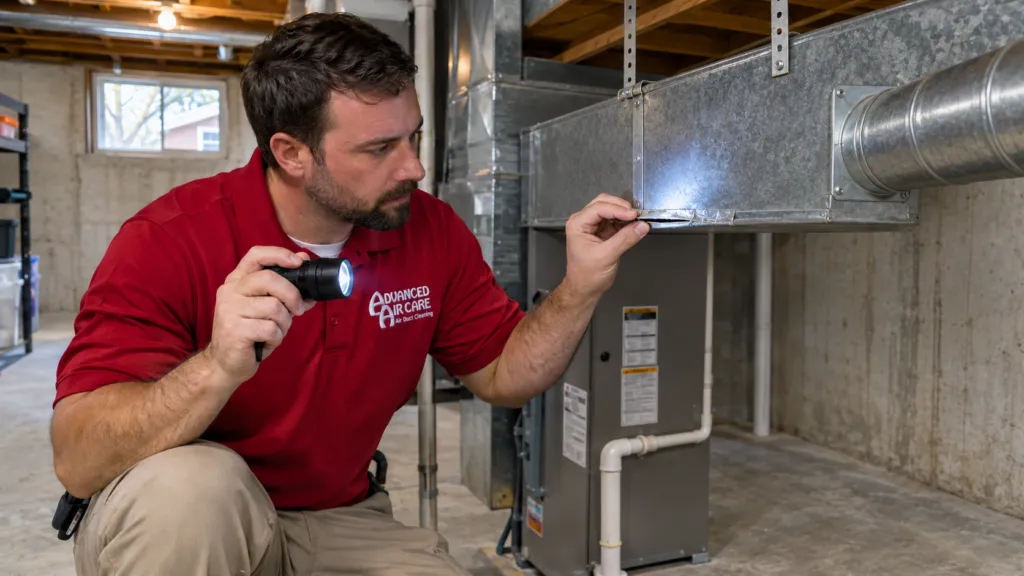
In accessible areas such as an unfinished basement, attic, or crawl space, look for:
- Separated duct connections
- Visible gaps around joints
- Torn flexible ducts
- Crushed or kinked ductwork
- Damaged sealing material
- Connections that appear loose
ENERGY STAR recommends inspecting accessible duct connections and sealing leaks using appropriate materials such as mastic or metal foil tape—not ordinary cloth-backed “duct tape.” (ENERGY STAR)
But much of a home’s ductwork is hidden behind walls, floors, and ceilings, so a visual inspection cannot identify every leak.
Supply Leaks vs. Return Leaks: What’s the Difference?
This distinction helps explain why leaky ductwork can create different symptoms.
Supply-Side Leaks
Supply ducts carry heated or cooled air from the HVAC system to your rooms.
When they leak, some of that conditioned air may escape before reaching the living space.
Possible clues include:
- Weak airflow
- Uneven temperatures
- Longer HVAC run times
Return-Side Leaks
Return ducts carry air back to the HVAC system.
If return ductwork leaks in an attic, crawl space, or another unconditioned location, the system may pull air and particles from that surrounding space.
This is why some duct-leak problems are mainly about lost conditioned air, while others may also affect the type of air being pulled into the system.
How Do You Check Air Ducts for Leaks?
Homeowners can inspect accessible ductwork, but hidden leakage is more difficult to diagnose.
A professional evaluation can include duct leakage testing, which measures how much air escapes from the duct system instead of relying only on visible gaps.
Testing is especially helpful because many important leaks are located behind walls, ceilings, or other areas that cannot easily be inspected.
That article will explain how duct leakage is measured and why before-and-after testing can provide a more objective picture of duct-system performance.
Can Leaky Ductwork Be Sealed?
Yes, although the right method depends on the type and location of the leaks.
Accessible leaks may sometimes be addressed manually using appropriate duct-sealing materials.
Hidden leaks are more difficult because portions of the system may be buried behind finished walls or ceilings.
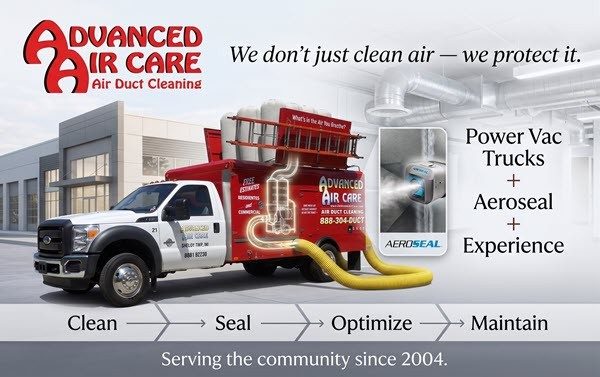
Advanced Air Care offers Aeroseal duct sealing, which uses a pressurized process to seal eligible leaks from inside the duct system. AAC’s Aeroseal service is designed specifically for duct-leakage problems that may be difficult to reach manually. (Advanced Air Care)
The next step should be determining whether meaningful leakage actually exists and where the problem is coming from, rather than assuming every comfort or dust issue requires duct sealing.
Leaky Ductwork FAQs
1- What are the most common signs of leaky ductwork?
Uneven temperatures, weak airflow, high heating and cooling costs, visible duct damage, and ducts located in unconditioned spaces are common clues.
2- Can leaky air ducts make a house dusty?
They may contribute. Return-side leaks in dusty attics, crawl spaces, or similar areas can allow unwanted particles to enter the duct system. However, household dust has many potential sources.
3- Can duct leaks cause uneven temperatures?
Yes. If conditioned air escapes before reaching a room, that room may receive less heating or cooling than intended. ENERGY STAR identifies rooms that are difficult to heat or cool as a common sign of duct problems. (ENERGY STAR)
4- How can I find hidden duct leaks?
A professional duct leakage test can measure leakage that may not be visible during a basic inspection.
5- Does Aeroseal fix leaky ductwork?
Aeroseal is designed to seal eligible leaks within the duct system from the inside. Some larger, damaged, disconnected, or structurally compromised duct sections may require manual repair before sealing.
6- Will sealing ducts lower my energy bills?
It can improve HVAC efficiency when significant leakage is present, but actual savings vary by home. ENERGY STAR reports that leaky ducts can reduce heating and cooling efficiency by as much as 20%. (ENERGY STAR)
Think Your Ductwork May Be Leaking?
If your home has persistent hot and cold rooms, weak airflow, unexplained dust, or signs of duct damage, guessing will only tell you so much.
At Advanced Air Care, we help Metro Detroit homeowners evaluate duct-system performance and provide Aeroseal duct sealing when sealing is an appropriate solution.
Call Advanced Air Care at (586) 416-1900 or request your free quote online.